Protecting Charleston County's Quality of Life is On the Ballot
Vote YES for renewal on Charleston County Questions 1 and 2 to repair our roads and protect land and water on November 3, 2026.
Many of Charleston’s most beloved landmarks are protected today because Charleston County voters chose to invest in them. The same county program has repaired our roads, kept CARTA buses running, and saved parks, farms, and marshes across the county. It ends next year unless voters renew it.
The Coastal Conservation League recommends a YES vote on both ballot questions. This is a renewal. It does not raise taxes. And you won’t carry the load alone: visitors and commuters who use our roads and enjoy our parks help pay for them.
Find it on your ballot
Look for Charleston County Questions 1 and 2. They usually appear after the candidate races, so keep going until you reach the end.
- Question 1 renews the program already in place. It can only be used for three things written into the ballot: repairing roads and making them safer, expanding CARTA bus service, and protecting land and water.
- Question 2 helps the most important projects get built sooner instead of years from now.
Vote YES on both.
Why the Conservation League is weighing in
Roads decide where growth goes. When a highway is widened or a new road cuts through farmland, development follows close behind, along with more traffic, more pavement, and more flooding. For more than three decades, the League has worked to steer those choices toward communities that are easier to get around and landscapes that stay intact.
This renewal pairs smart transportation choices with land protection. It invests in buses, sidewalks and bike paths alongside road repair, and it protects land before it’s developed. That combination is what we have pushed for, and it’s why we’re asking you to vote YES.
Protect our land and water before it's too late
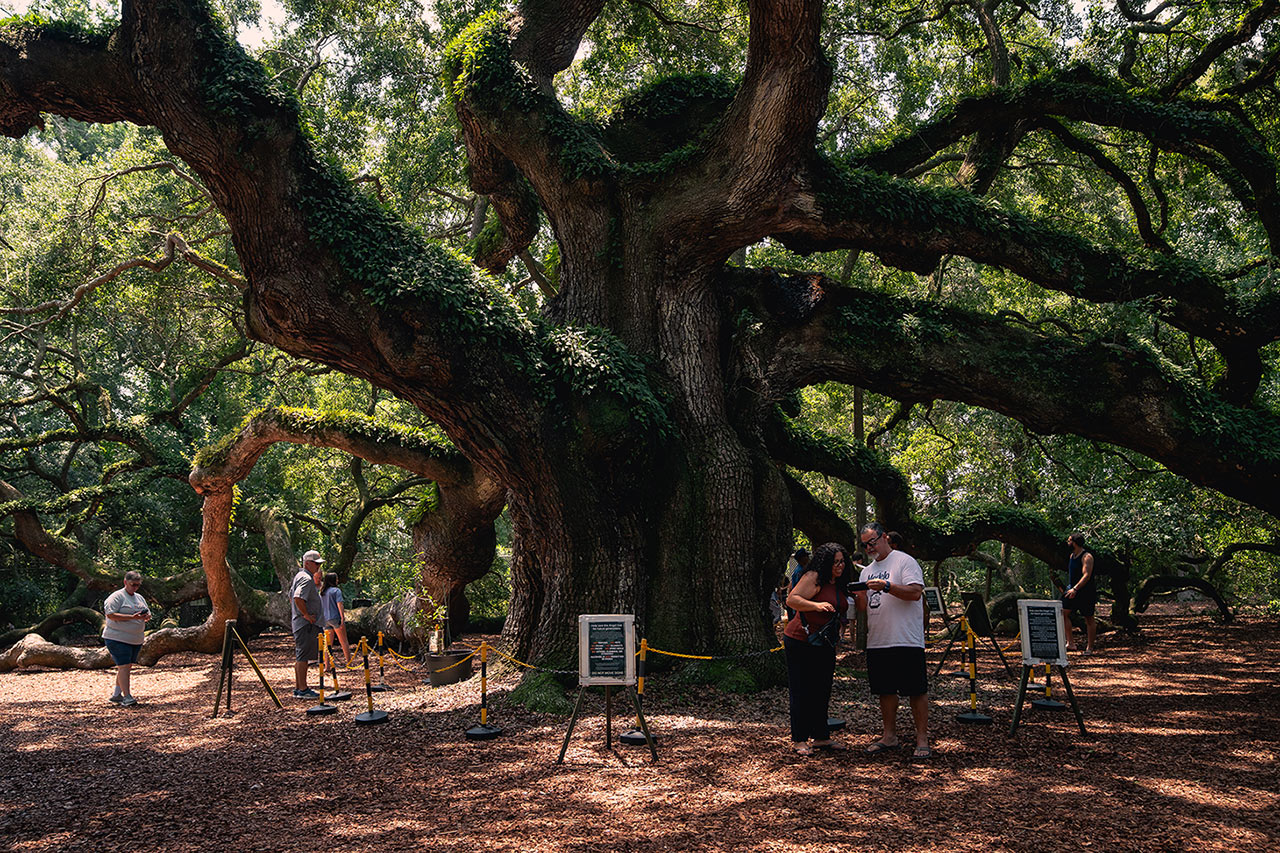
Charleston’s beautiful Angel Oak tree, located on Johns Island, said to be the largest live oak east of the Mississippi River.
Charleston County is growing fast. Every year, more of the forests, farms, and marsh edges that make the Lowcountry unlike anywhere else are lost to development. Once they’re paved over, they’re gone for good. We need to protect the lands most critical to clean water, wildlife, and our rural character now, while we still can.
The county’s Greenbelt program has a track record you can visit. It helped protect the Angel Oak, Boone Hall and the tip of Morris Island, and it brought improvements to places like James Island County Park. Renewal keeps that work going.
- Cleaner drinking water. Natural lands filter the water that feeds our drinking supply and keep our rivers, bays and marshes healthy.
- Less flooding. Wetlands and forests hold water during storms. Protecting land and creating new public spaces along waterways, including along the Battery, will reduce flooding on roads and in neighborhoods.
- Smarter growth. Saving land in rural and natural areas helps manage growth and eases the problems that come with overdevelopment, like congestion and flooding.
- Places to get outside. The Greenbelt creates nature parks for fishing, hiking, and boating, and adds parks, trails and greenspace close to home.
- Working farms and forests. Half of the Greenbelt’s work happens in rural Charleston County, where it protects our food supply, rural character, and agricultural heritage. Those farms matter to the growers who sell through our GrowFood Carolina program and to the communities that depend on them.
Repair our roads, enhance safety, and reduce congestion. It's up to us!
We need to repair existing roads and intersections, make travel safer, and cut the time we all spend stuck in traffic. This program is the main local source of support for road repair and bus service in Charleston County. It’s up to us.
It also gives more of us a way to get where we’re going without a car. That means less traffic, safer streets, and fewer carbon emissions.
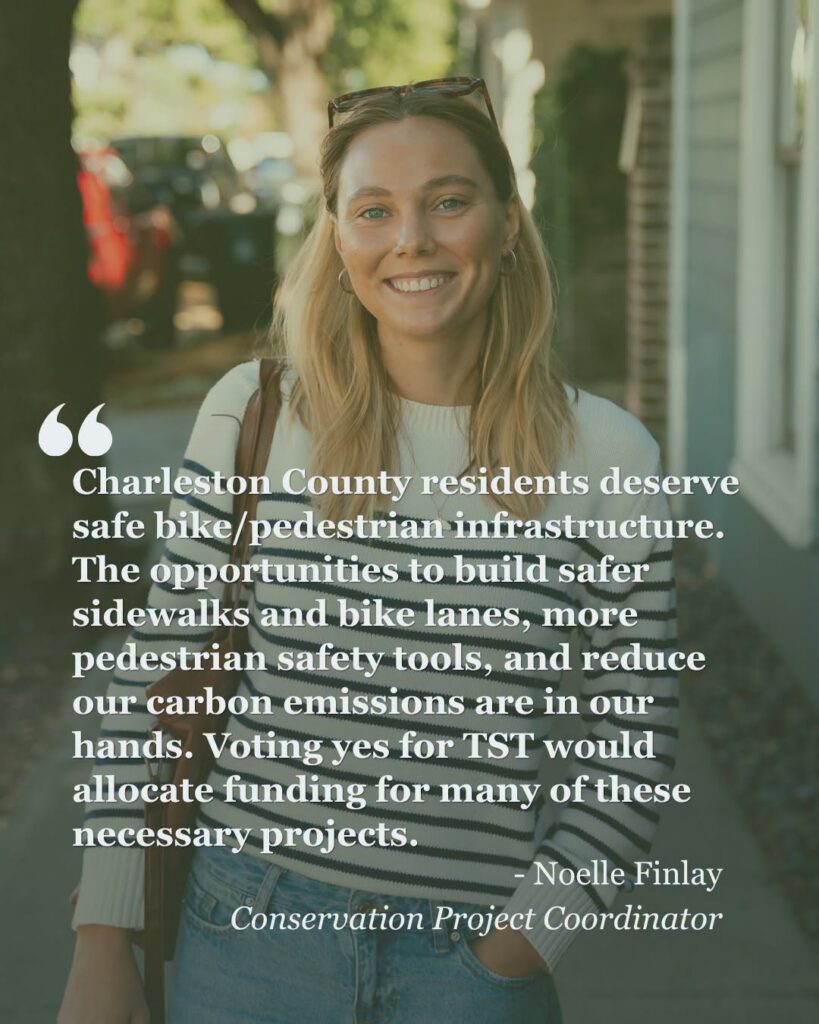
Our colleague, Noelle Finlay, walks to work almost every day, crossing busy roads and intersections along the way. Renewal of the Transportation Sales Tax would make that walk safer for her and for people like her, downtown and beyond.
- Safe streets for all. Too many people walking and biking in Charleston County are hurt or killed. New sidewalks, bike paths, trails, and crosswalks make every trip safer. Every project in the program must consider bicycle, pedestrian and transit access in its design.
- More CARTA routes, more often. Expanded bus service helps residents, especially seniors and lower-income neighbors, get to work, school, the doctor, and the grocery store.
- Synchronized traffic signals. Better-timed signals mean shorter waits, safer trips, and less tailpipe pollution.
- Repaving and resurfacing. Keeping up with basic maintenance protects what we’ve already built. Putting off repairs only makes them harder later and puts lives at risk.
- Projects in every part of the county. Every city and resident was invited to weigh in. The result is a project list, printed on the ballot, that includes Maybank Highway, Glenn McConnell Parkway, Rivers and Durant Avenues, Long Point Road, Savannah Highway, and many more.
- Fixing roadway flooding. When roads are rebuilt, drainage gets fixed too, from the Medical District to neighborhood streets.
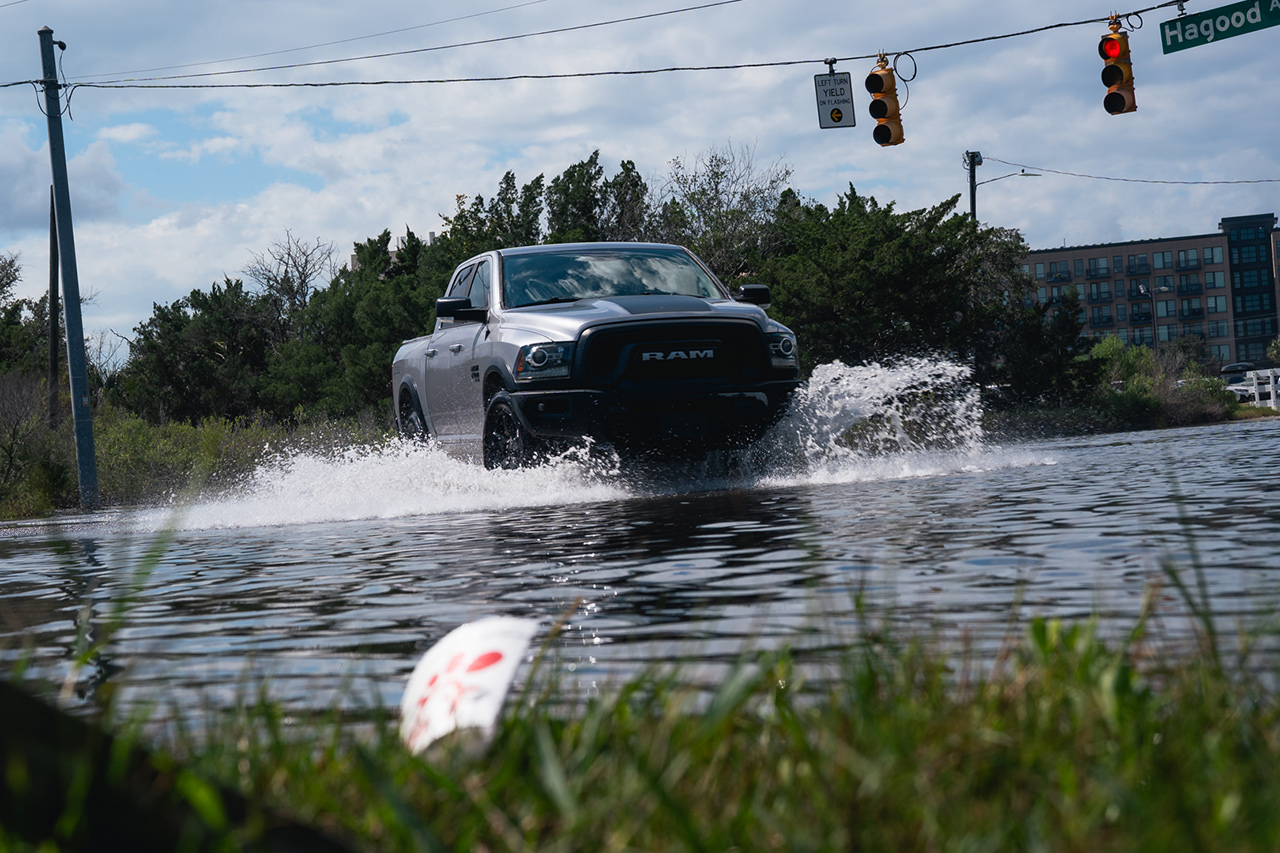
A vehicle makes its way through flood waters on Hagood Avenue.
Strict accountability and transparency are built in. They listened!
The county took a transparent approach to choosing projects and made sure they are spread fairly across every city and region.
- Public audits. Every project is subject to an annual independent audit, made available to the public. Funds can only be used for the purposes voters approve.
- Projects listed on the ballot. For the first time, voters can read exactly what the program will deliver. If a project can’t move forward, its share can only go to another project already on the list.
- Visitors do their part. More than half of the cost is covered by tourists, out-of-county shoppers and other non-residents. They use our roads, so they should help maintain them.
- Local investment goes farther. The county will seek matching support from federal, state and private sources.
- A renewal, not an increase. It does not raise taxes. It continues a program that has served our community for more than 20 years.
- See where every dollar goes. Charleston County’s program site, charlestontransportation.com, breaks down the $4.25 billion plan: 64% for roads, 20% for public transit, and 16% for the Greenbelt. You can also explore every proposed project on an interactive map.
Why no in 2024, and why yes now
In 2024, the League urged voters to say no, and they did. That plan put the I-526 Mark Clark Extension ahead of everything else. The highway would have filled wetlands, polluted the Stono River, cut through James Island County Park, and split historic settlement communities. It also shrank the Greenbelt’s share. Read about our work to end the I-526 Extension.
After that vote, we asked the county for a better plan in 2026. We said it should finish practical traffic fixes, restore the Greenbelt, support public transit, address flooding on our roads, and make streets safer for people on foot. The county listened, and the 2026 plan does all of that:
- Practical traffic fixes, not one megaproject. Projects reach every part of the county, including the Maybank Highway southern pitchfork we called for in 2024.
- The Greenbelt restored to its historic share, protecting land and water across the county.
- CARTA bus service back in the plan, so more people have a way to get around without a car.
- Roadway flooding addressed. When roads are rebuilt, drainage is fixed as part of the work.
- Safer streets for people walking and biking. Sidewalks and multi-use paths are written into the plan.
The local residents behind A Better Charleston County also opposed the 2024 plan. Today they’re leading the campaign for YES. A better plan earned their support, and it has earned ours.
Frequently asked questions
- Will this raise my taxes? No. This is a renewal at the same rate you pay today.
- What happens if it doesn’t pass? The program ends, and with it, the main local support for road repair, CARTA bus service, and the Greenbelt goes away too.
- Why are there two questions? Question 1 renews the program, and Question 2 advances funding that gets the most important projects built sooner.
We're in good company
The League is proud to stand with conservation, preservation, and community partners in support of Questions 1 and 2, including Charleston Waterkeeper, Lowcountry Land Trust, Southern Environmental Law Center, The Nature Conservancy, Trust for Public Land, Open Space Institute, Ducks Unlimited, Preservation Society of Charleston, Historic Charleston Foundation, Edisto Island Open Land Trust, Conservancy of the Sea Islands, Conservation Voters of South Carolina, Rational Roads for Johns Island, and The M.A.R.S.H. Project.
Make your plan to vote
- Early voting: now through Saturday, October 31, from 8:30 a.m. to 6 p.m.
- Election Day: Tuesday, November 3, polls open 7 a.m. to 7 p.m.
- Find your polling place: Visit scvotes.gov.
Look for Charleston County Questions 1 and 2 near the end of your ballot, and vote YES on both.