
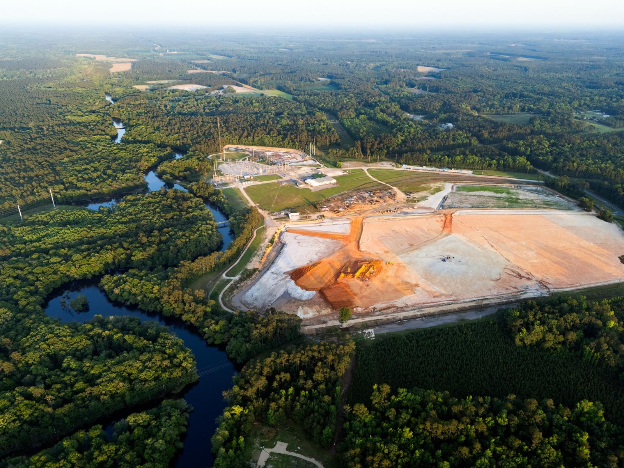
We are disappointed to report that the S.C. Public Service Commission (PSC) voted 7-0 on Thursday, May 14, to approve the proposed 2,200-megawatt gas plant on the Edisto River in Canadys, SC. The project had been proposed by Dominion Energy South Carolina and Santee Cooper, which had to obtain legislative approval as a state-owned power authority to enter into a joint venture with a private company.
The League’s State Energy & Climate Program Director Taylor Allred spoke with the Post & Courier immediately following the PSC decision and noted that, “One positive outcome in the vote today was that they will require quarterly reporting on cumulative costs that are accruing as the project progresses, rather than just estimated costs . . . . [That] will hopefully provide a little more accountability and at least a little more transparency.”
This information could enable the Commission to impose a cost cap, as it did with the failed V.C. Summer nuclear expansion. So far, the estimated cost of the Canadys gas plant has ballooned from $2.5 billion to $5 billion in the year between seeking approvals from the legislature and the PSC. The PSC approved the project despite significant cost uncertainty, as utilities have not yet secured an engineering, procurement, and construction contractor, which could comprise 75% or more of the project cost. This could mean much higher electric rates for the majority of South Carolinians.
The fight isn’t over yet!
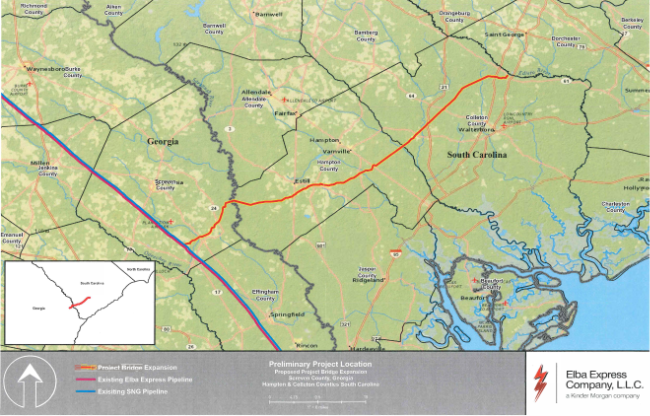
The Canadys gas plant will still need to obtain permits from the Department of Environmental Services (DES) for Clean Air Act compliance, discharging effluent into the Edisto River, and withdrawing groundwater for cooling. Dominion has asserted that it still holds a permit to withdraw water from the Edisto River that it had for the long-retired and dismantled 490-megawatt coal plant that once sat at the site. Despite the utilities’ assertion that the gas plant would use 90% less water than the coal plant, they have indicated that they plan to seek DES approval to withdrawal more than 500 million gallons of groundwater per year, on top of the river water. There will be opportunities for public comment on these permit applications. In addition, the 71-mile pipeline being planned to fuel the gas plant will need to obtain approval from the Federal Energy Regulatory Commission, which will also offer opportunities for public comments.
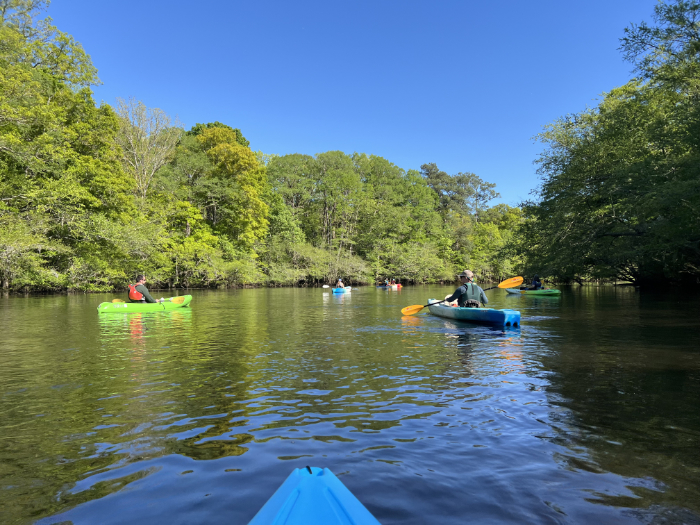
This has been a long, hard-fought campaign spanning several years, but it isn’t over yet. The Conservation League heard it again and again – from engaging with local concerned citizens at Duke’s BBQ in Walterboro and uncovering the pipeline map, to paddling the Edisto River in 2024 and 2025, rallying at Colleton State Park and other events – the people don’t want this project in their community.
What’s at Stake
The Canadys plant is expected to emit air pollutants, including nitrogen oxides, volatile organic compounds, and fine particulate matter, which could cause serious harm to human health in surrounding communities in the Lowcountry. A study released by Harvard researchers found that more than two million people could be impacted by additional fine particulate matter, which is known to be unsafe at any level and can contribute to increased hospitalizations due to heart attacks, pneumonia, cancer, and other severe health conditions. In addition, the plant will be a major emitter of greenhouse gases, contributing to global warming and sea-level rise, which is driving the rise of chronic coastal flooding in Charleston and other communities.
If approved, the gas pipeline would run under the Savannah River, cross numerous waterways and wetlands in the ACE Basin, and threaten private property rights with eminent domain – potentially even properties under conservation easements. The ACE Basin is considered the “crown jewel” of the Lowcountry, as one of the largest undeveloped estuaries on the Atlantic Coast, with rich biodiversity and natural beauty that has shaped our cultural traditions and quality of life. Beyond the gas plant, the pipeline could anchor a major industrialization of the ACE Basin, with the potential to expand its capacity to 300% above the initial phase of development.
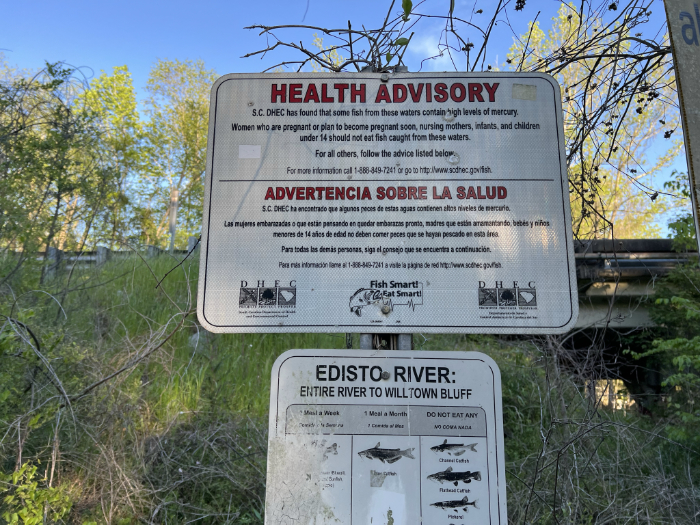
The Edisto River is the longest free-flowing blackwater river in North America, and it has already suffered the effects of decades of pollution, including toxic heavy metals from Dominion’s shuttered coal plant. The former Department of Health and Environmental Control posted signs near the power plant site that still warn the public against eating fish from the river due to high levels of mercury. As the utilities seek permits from DES, it will be important to speak out about the importance of protecting the river from potentially harmful effects from the gas plant’s water withdrawals and discharges.
Background
The Coastal Conservation League intervened in the proceeding before the PSC along with the Southern Alliance for Clean Energy, with the Southern Environmental Law Center serving as our counsel. We appreciate the great work of our partners, and we are proud of the strong case we brought before the Commission, including the thorough and well-supported testimony of our expert witnesses, who presented sophisticated modeling on generating capacity expansion alternatives, transmission costs, and fuel costs, among other things. We also appreciate the Sierra Club and local landowners John Burbage and Lauren V. Moody Stanfill, who also intervened. In addition, we appreciate the hundreds of community members who submitted public comments or showed up to testify at public hearings, as well as the many organizations across the Lowcountry that helped to inform the public.
In their 2023 integrated resource plans approved by the PSC, the utilities had originally proposed a much-smaller gas plant that they said was needed to retire their aging coal plants. Since then, the utilities have repeatedly pushed back their tentative coal retirements dates and have pointed to growing demand driven by data centers as justification for keeping them open. The inefficient coal units would likely require tens of millions of dollars of upgrades to keep them running and to comply with federal environmental regulations, putting further upward pressure on rates on top of the billions spent on new gas-fired generating capacity. The League will work to push for the timely retirement of these costly, polluting coal plants.
In addition to providing authorization for Santee Cooper to partner with Dominion on the Canadys gas plant, 2025’s Act 41 made substantial changes to regulatory statutes that made our work much harder. These include an aggressive six-month deadline for the PSC’s final order and a burdensome cost barrier that made it unfeasible to access both of the separate modeling software suites the two utilities relied on to justify the cost of the plant.
We need you in the fight!
Stay tuned for future opportunities to speak out and defend the Lowcountry from harmful fossil-fuel infrastructure. We deeply appreciate your support, and we remain steadfastly committed to protecting the communities and natural environment of South Carolina’s coastal plain, as we have done since 1989.