Skip to content
  • Conservation Programs
    • Land Use Planning
    • Resilient Coastal Communities
    • Wildlife & Waterways
    • Energy & Climate
  • GrowFood Carolina
    • How it Works
    • Find the Fork (Restaurants & Retailers)
    • Partner Farms & Producers
    • Buy a Produce Box
    • Donate to Growfood Carolina
    • Soil to Sustenance
  • Get Involved
    • Take Action
    • Become an Advocate
    • Events & Volunteering
    • News
    • Get Updates
    • Donate
    • Shop
  • Ways to Give
  • About Us
    • Staff
    • Board of Directors
    • Financials
    • Employment
    • Contact Us
  • Conservation Programs
    • Land Use Planning
    • Resilient Coastal Communities
    • Wildlife & Waterways
    • Energy & Climate
  • GrowFood Carolina
    • How it Works
    • Find the Fork (Restaurants & Retailers)
    • Partner Farms & Producers
    • Buy a Produce Box
    • Donate to Growfood Carolina
    • Soil to Sustenance
  • Get Involved
    • Take Action
    • Become an Advocate
    • Events & Volunteering
    • News
    • Get Updates
    • Donate
    • Shop
  • Ways to Give
  • About Us
    • Staff
    • Board of Directors
    • Financials
    • Employment
    • Contact Us
Give Now
  • Tuesday, May 21, 2024
  • Blog, News

News from the Nest is back!

image of ...

Welcome back to News from the Nest! The official start to nesting season kicked off March 15, and we are already in the thick of it. Right now, temperatures are heating up, some of our nesting birds are starting to settle on eggs, and our long-distant migratory species are leaving our shores after fueling up for their flights. We are excited to bring back our newsletter dedicated to sharing the latest and greatest news on coastal birds, their habitats, and ways you can help protect these vital species.

I hope you enjoy News from the Nest, and if you ever want to chirp about coastal birds or other wildlife, please feel free to reach out to me at rileye@scccl.org.

Image

South Carolina’s new official Seabird

We’re kicking this News from the Nest off with some exciting news: the Eastern Brown Pelican is now the official Seabird of South Carolina! 

Did you know these iconic species have long frequented our coast? The eastern brown pelican was first described in 1789 and came from the Charleston Harbor.

Today, nearly 40% of the East Coast’s nesting brown pelicans rely on the South Carolina coast, with important nesting colonies found at South Carolina Department of Natural Resource seabird sanctuaries Deveaux Bank and Bird Key.

Designating the brown pelican as the state seabird of South Carolina highlights the importance of preserving and enhancing the habitat of this species and other seabirds along our coast, and serves as a symbol of South Carolina’s commitment to environmental stewardship and wildlife conservation.

We want to thank Representative Wetmore (D-Charleston) and Senators Goldfinch (R-Georgetown), Jackson (D-Richland) and Campsen (R-Charleston) for their leadership and efforts to help highlight the value of our seabirds and their coastal habitat.

Image

Deveaux Bank / Andy Johnson, Cornell Lab of Ornithology 


Habitat Highlight: Deveaux Bank

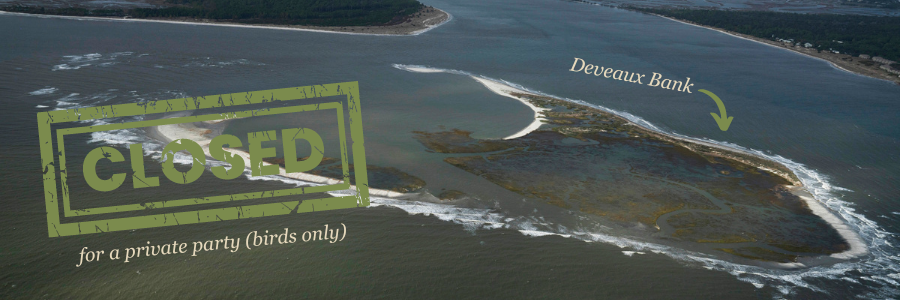
Deveaux Bank is a Seabird Sanctuary managed by the South Carolina Department of Natural Resources (SCDNR) at the mouth of the North Edisto River. Earlier this month, SCDNR announced a complete temporary closure of Deveaux Bank during nesting season, bringing Deveaux Bank in line with the protections afforded to our other seabird sanctuaries, like Bird Key and Crab Bank.

Although there are many barrier islands along our coast, colonial nesting seabirds — such as brown pelicans, black skimmers, and various species of terns — require specific habitats and features to rear young successfully. In South Carolina, Deveaux Bank is one of only six places that can support substantial colonies.

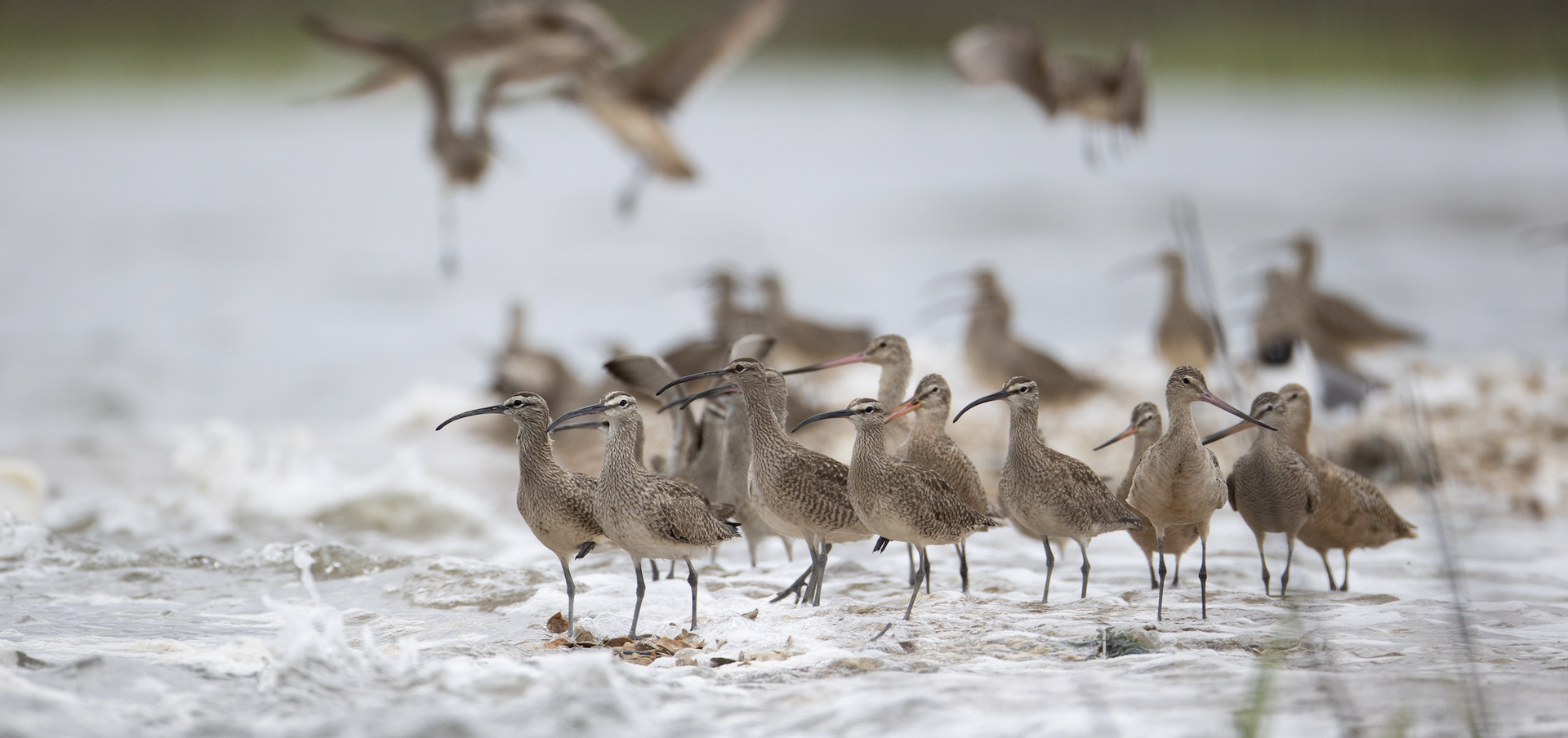
Deveaux Bank also boasts international importance as a refuge for migratory birds. In 2019, researchers discovered Deveaux Bank is the world’s largest known roost site for whimbrel, supporting 20,000 birds — half of the entire East Coast population. Deveaux Bank also supports one of the largest roosts in the Southeast for federally threatened red knots.

Image

Whimbrels using the intertidal area on Deveaux Bank / Andy Johnson, Cornell Lab of Ornithology 


Check out this newly released video by the Cornell Lab of Ornithology about the unique roost ecology of Deveaux Bank, as they explore the intricate function and delicate importance of these offshore refuges within coastal landscapes.  


Image

Aerial view of Deveaux Bank / J. Henry Fair with flight assistance from SouthWings

Despite its importance and fragility, SCDNR has historically allowed public access to Deveaux Bank year-round, including nesting season, and was the only Seabird Sanctuary to allow so for years. The impact of human disturbance on nesting, resting, and foraging birds is clear, and one of the most significant threats to coastal birds. Like a lot of our coast, Deveaux Bank has also experienced severe erosion from winter storms, leaving only a quarter of high ground available compared to last year. These compounding issues painted a grim outlook for nesting and migratory coastal birds relying on Deveaux Bank.

As coastal birds are trying to squeeze into ever-shrinking habitat, we are excited for the complete closure of Deveaux Bank during nesting, and are thankful for the leadership of Senator Campsen (R-Charleston) and Mayor Bradham of Rockville to help safeguard this valuable place.

Image

We are excited to announce the relaunch of the Crab Bank Pelicam! After months of work and support from Mount Pleasant Radio, Harbor Pilots, SCDNR, Audubon South Carolina, and the National Fish and Wildlife Foundation (NFWF), we are fluttering at the chance to share a safe, easy way to stay in tune with the happenings on Crab Bank.

Watch the Crab Bank Pelicam!

Image

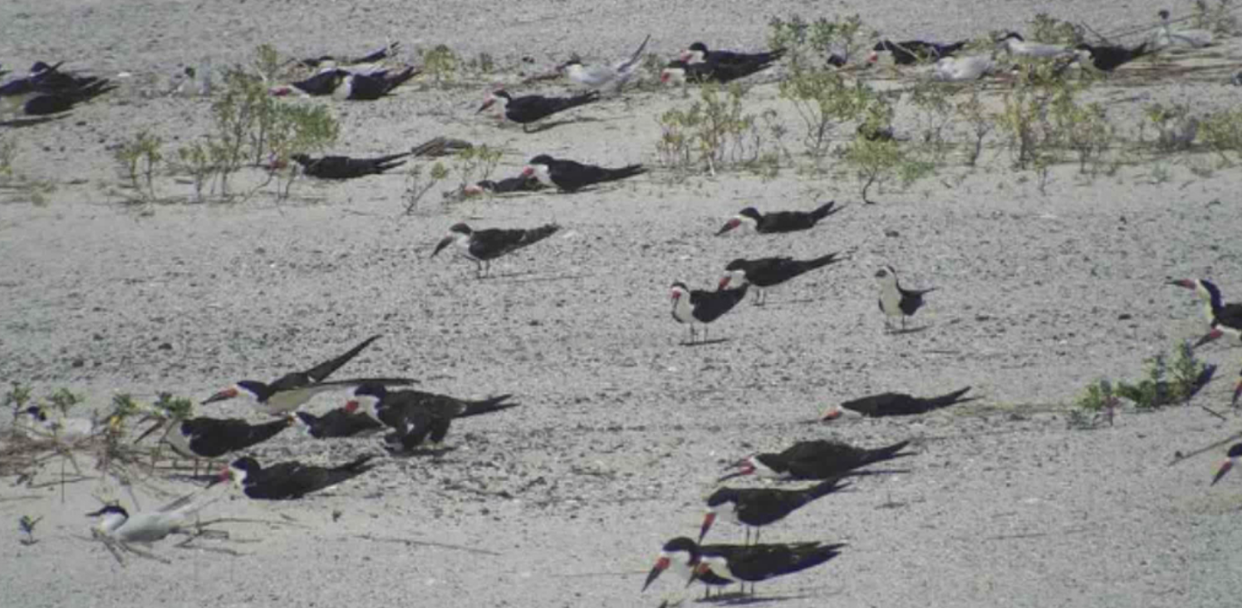
Black skimmers on Crab Bank as seen from the Pelicam. 


The Conservation League launched our live wildlife camera, the Pelicam, on Crab Bank in 2015. But as you know, the conditions on Crab Bank were drastically different in 2017, and we knew the Pelicam was broadcasting on borrowed time. We had no choice but to find it a new home and relocated it a short distance away on Shutes Folly.

We planned to return the Pelicam to Crab Bank once restoration wrapped up. However, thanks to funding from the NFWF, we can bring new eyes on the island with a brand new Pelicam!

Image

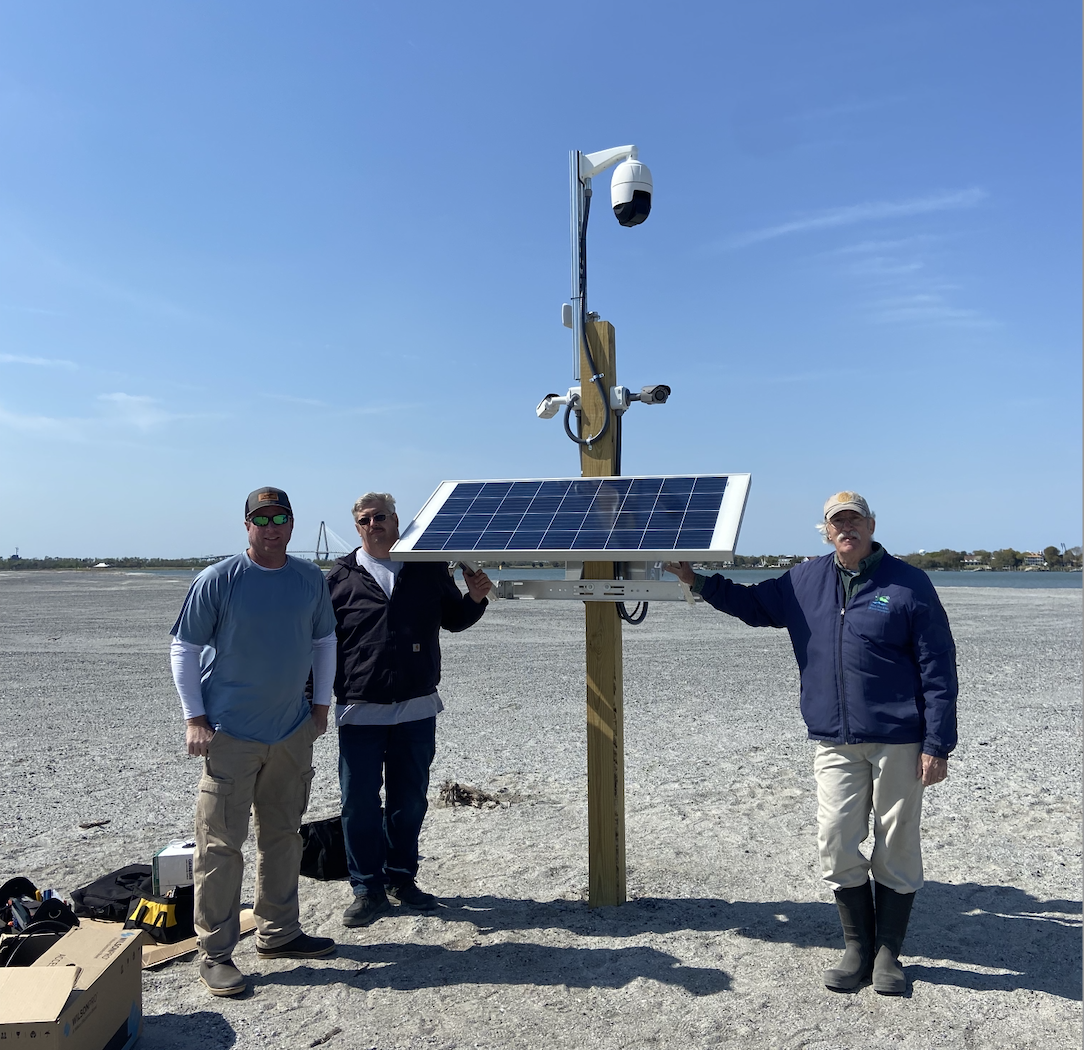
Mount Pleasant Radio staff installing the Pelicam on Crab Bank


So how does it work? Well, we are especially thankful for Mount Pleasant Radio for crafting and installing these unique systems. A solar panel fuels the cameras, two static and one moveable, on a mounted pole. The feed then transmits via radio to a computer at the Charleston Harbor Pilots. From there, we use specialized software to convert the radio signals to video, then to a YouTube live stream, and finally to you wherever you may be! We are working to bring back the Shutes Folly Pelicam and an additional Pelicam on the East end of Crab Bank to give you even more wildlife watching options, and we’ll make sure to keep you posted on when those are up and running!

We move the camera around frequently, so we encourage you to check back often to see the latest views. If you spot an interesting snapshot while you’re scoping the live feeds, we want to see it! Please feel free to screenshot the feed anytime and send us what you see at NestNews@scccl.org.

One way you can help protect coastal birds is by watching the Pelicam!


Crab Bank is closed to public access (including kayak landing) from March 15 – October 15. You can have the Crab Bank Pelicam streaming on a separate monitor or browser while you work or go about your day, and if you see a boat or kayak land on Crab Bank and people roaming on Crab Bank, alert SCDNR law enforcement. There are several ways you can let them know:


  • Call the SCDNR Law Enforcement 24-Hour Hotline at 1-800-922-5431


  • Text 847411 (tip411) with your report


  • Download and report your sightings on the SCDNR Tip app


  • Submit an anonymous tip on SCDNR’s online form


(From time to time, SCDNR staff or permitted researchers may access Crab Bank during nesting season. When you report a tip, law enforcement will know if the person you’re seeing should be there or not and respond accordingly!)


We appreciate your support and hope you enjoy the views!

Stay Up-To-Date

Sign up for the latest news from the Coastal Conservation League and find out how you can get involved in our efforts.

  • Careers
  • Contact Us
  • Financials
  • Shop
  • Privacy Policy
  • Careers
  • Contact Us
  • Financials
  • Shop
  • Privacy Policy
  • Careers
  • Contact Us
  • Financials
  • Shop
  • Privacy Policy
  • Careers
  • Contact Us
  • Financials
  • Shop
  • Privacy Policy
Give Now

©2026 Coastal Conservation League. All Rights Reserved. Site by WDW

Give Now